The global B2B lead generation market is valued at $12.50 billion in 2026, reflecting rapid growth driven by AI, automation, and data-driven strategies. Businesses are shifting toward personalised, multi-channel approaches to improve conversions and efficiency. However, challenges like low-quality leads and poor conversion rates remain significant barriers.
This article explores the latest lead generation statistics, covering trends, performance benchmarks, channels, challenges, and future outlook.
Top Lead Generation Statistics
- AI tools increase B2B conversion rates by 35%.
- Personalised CTAs convert 202% better than generic CTAs.
- 79% of B2B leads never convert into customers.
- Segmented email campaigns generate 760% more revenue.
- SEO leads close at 14.6%, far higher than outbound.
- Responding within one hour boosts qualification odds sevenfold.
Lead Generation Trends In 2026
The global B2B lead generation market is valued at $12.50 billion in 2026, growing at an 11.33% CAGR, driven by digital transformation, AI adoption, and increasingly data-driven buyer journeys. Below are the defining trends shaping how organisations attract and convert leads in 2026.
- AI is no longer a nice-to-have in B2B sales; it has become a core driver of results. 79% of B2B sales teams say AI has made them more profitable, and 78% report shorter sales cycles.
Source: LinkedIn
- The impact shows up in the numbers, too. Companies leveraging AI-powered lead generation tools report a 35% increase in conversion rates, while 67% of B2B companies use AI to analyse customer behaviour and predict buying intent.
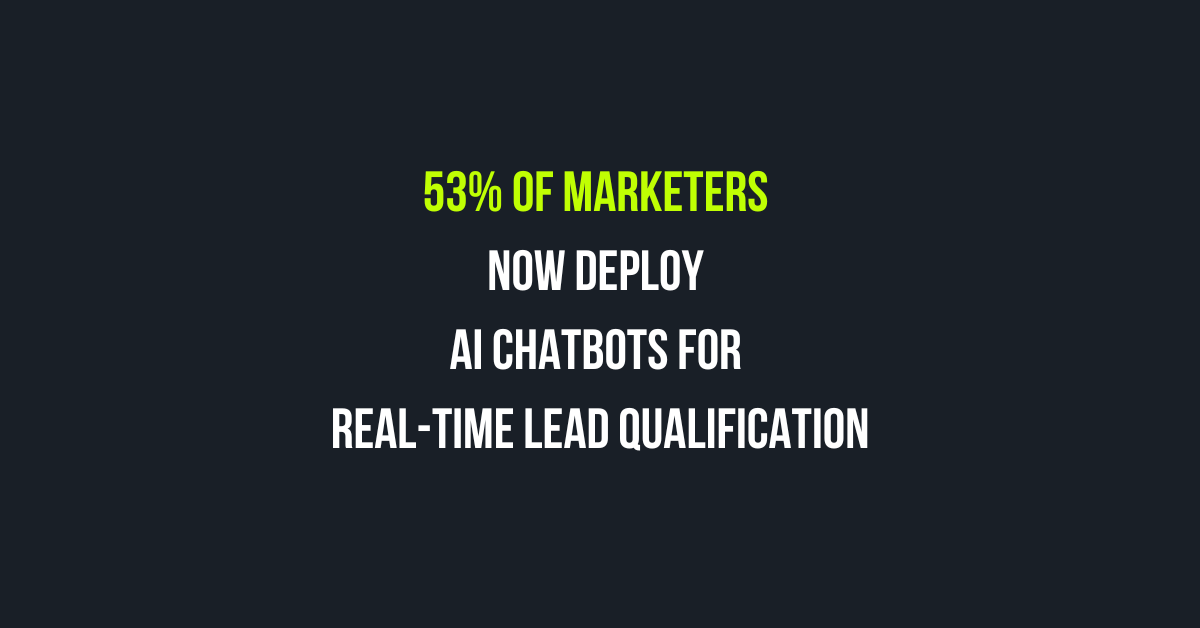
- On the front lines, 53% of marketers now deploy AI chatbots for real-time lead qualification, and AI-driven lead scoring has improved qualification accuracy by 40%.
Source: Reach Marketing
The upside extends well beyond just conversions. McKinsey research indicates companies using AI in sales can increase leads and appointments by more than 50%, with organisations using AI saving 40-60% higher marketing campaign ROI on average.
Source: McKinsey
In 2026, 87% of marketers use generative AI in at least one workflow, and 95% of B2B marketers use AI at least weekly, with 65% using it daily. Meanwhile, UK and Ireland B2B buyers control 57% of their purchase journey before vendor contact, versus 61% globally, suggesting UK buyers may be slightly more open to early-stage sales engagement.
Source: G2, Digital Applied, GMR
Buyers Expect Personalised Experiences
Modern B2B buyers come with high expectations, and meeting them is no longer optional. 51% of B2B buyers expect high-to-very-high levels of personalisation when researching and buying, while 72% of decision-makers prioritise one-to-one consultations with subject-matter experts.
Source: Insight Collective
The data backs up the value of personalisation at every touchpoint. Personalised CTAs convert 202% better than generic ones, and personalised email campaigns result in a 29% higher open rate and 41% higher click-through rate.
Source: HubSpot, invesp
Taking it a step further, segmented email campaigns generate 760% more revenue than non-segmented ones, making audience segmentation one of the highest-leverage moves a B2B marketer can make.
Source: Campaign Monitor
Personalisation also matters beyond email. Companies with strong omnichannel strategies report an engagement rate of 18.96%, compared to just 5.4% for single-channel approaches.
Source: Omnisend
Lead Quality Is Replacing Lead Quantity
Lead generation remains the cornerstone of B2B marketing, but the volume of leads alone tells only part of the story. 91% of B2B marketers prioritise lead generation, yet the industry faces a critical paradox: while organisations generate an average of 1,877 leads monthly (a figure that rose to approximately 2,100 by Q3 2025), 79% of those leads never convert to customers.
Source: Cirrus Insight, HubSpot 2
70% of B2B marketers now report active Account-Based Marketing (ABM) programmes, a sign that quality targeting is taking precedence over sheer volume.
Source: Adroll
B2B Lead Generation Statistics
85% of B2B businesses consider lead generation their most important marketing goal. 53% of marketers spend over half of their entire marketing budget on lead generation.
Source: Blogging Wizard
In 2025, 37% of B2B marketers say growing a high-quality lead pipeline is their top priority, followed by implementing AI technology (35%) and leveraging data to inform decisions (33%).
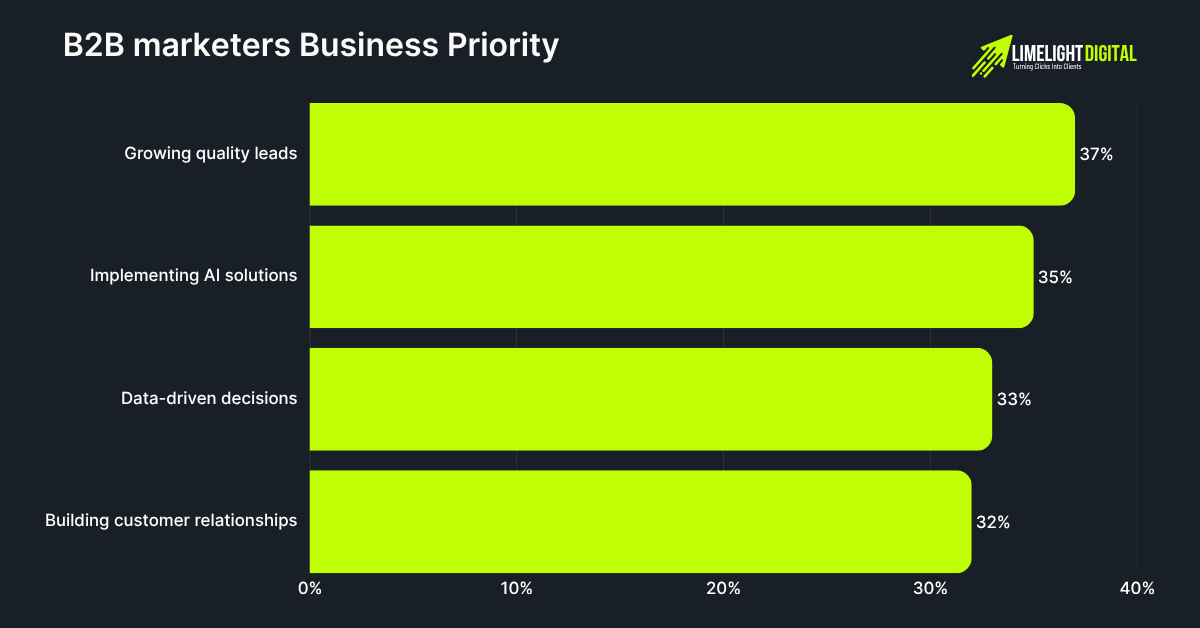
These are the priorities of B2B marketers:
| Priority | Percentage |
|---|---|
| Growing a high-quality lead pipeline | 37% |
| Implementing AI technology | 35% |
| Using data to drive decisions | 33% |
| Building relationships with new customers | 32% |
Source: Semrush
It is also worth noting that marketing spend varies significantly by sector. B2C product companies invest the most in marketing (~14.1% of revenue), while B2B services spend the least (~6.3%), highlighting how consumer-focused businesses rely more heavily on marketing to drive demand.
Source: CMO
Lead Nurturing Statistics
Lead nurturing is the process of developing relationships with buyers at every stage of the funnel. The data below underscores how critical nurturing is to revenue outcomes.
Companies with strong lead nurturing programmes generate 50% more sales-ready leads at 33% lower cost per lead, compared to companies without systematic nurturing.
Source: Invesp
Nurtured leads make 47% larger purchases than non-nurtured prospects and convert 23% faster, directly impacting both deal size and sales velocity. Companies excelling at lead nurturing report a 20% increase in sales opportunities.
Source: LinkedIn
65% of marketers have not implemented lead nurturing, yet nurtured leads make 47% larger purchases. This gap represents significant untapped revenue potential.
Source: Amra & Elma
B2B buyers consume between 3 and 7 pieces of content before connecting with sales. 84% of deals are won by the first vendor a buyer contacts, meaning companies that nurture early-stage buyers through content gain a decisive competitive advantage.
Source: LinkedIn 1, 6sense
A US-based SaaS startup using predictive AI nurturing to deliver tailored content at optimal moments achieved a 40% increase in qualified meetings. Organisations leveraging AI nurturing see an average 25-30% increase in conversion efficiency.
Behavioural trigger emails produce 30 times more revenue per recipient than non-automated messages. Automated nurturing emails generate 320% more revenue than manual campaigns.
Source: The Digital Bloom
Lead Conversion & Performance Benchmarks
Different channels deliver vastly different lead volumes, quality, and conversion rates. Here is a data-driven breakdown.
The median B2B conversion rate across all industries is 2.9% (Ruler Analytics analysis of 100+ million data points, August 2025). Top-performing companies consistently achieve 8-12% conversion rates on demo request forms.
Source: Martal Group
The average B2B conversion rate has risen by 15% compared to 2023, and companies leveraging CRO strategies have seen improvements of up to 300%.
Source: Predictable Profits
In Q3 2025, B2B companies averaged approximately 2,100 monthly leads, with a 4.1% increase from Q2 2025.
Source: The Digital Bloom
Leads acquired through referrals cost 80% less than paid leads, and companies that automate lead nurturing see a 33% lower CPL. Using SEO as a primary lead channel can reduce CPL by 60%.
Source: Marketing LTB
Responding to a lead within the first hour generates 7x higher qualification odds, while calling a lead after 30 minutes reduces close probability by 80%.
Source: Marketing LTB, Landbase
Lead Generation Channels Statistics
Different channels deliver vastly different lead volumes, quality, and conversion rates. Here is a data-driven breakdown.
Organic SEO leads close at a 14.6% rate, nearly 9 times higher than traditional outbound methods, which close at just 1.7%. A well-executed SEO campaign yields a median ROI of approximately 748%, with some sectors reporting 900-1,100% ROI in 2025 alone.
60% of marketers say inbound strategies like SEO generate the highest-quality leads. FirstPageSage analyzed their internal data and found that the average conversion rate for SEO is 2.4%.
Source: SEOProfy
Website/blog/SEO is the top ROI-generating channel according to marketers (27%), per HubSpot’s State of Marketing 2026 report. The UK holds 1.1 million e-commerce websites, second globally after the US, indicating a highly competitive SEO landscape for UK lead generation.
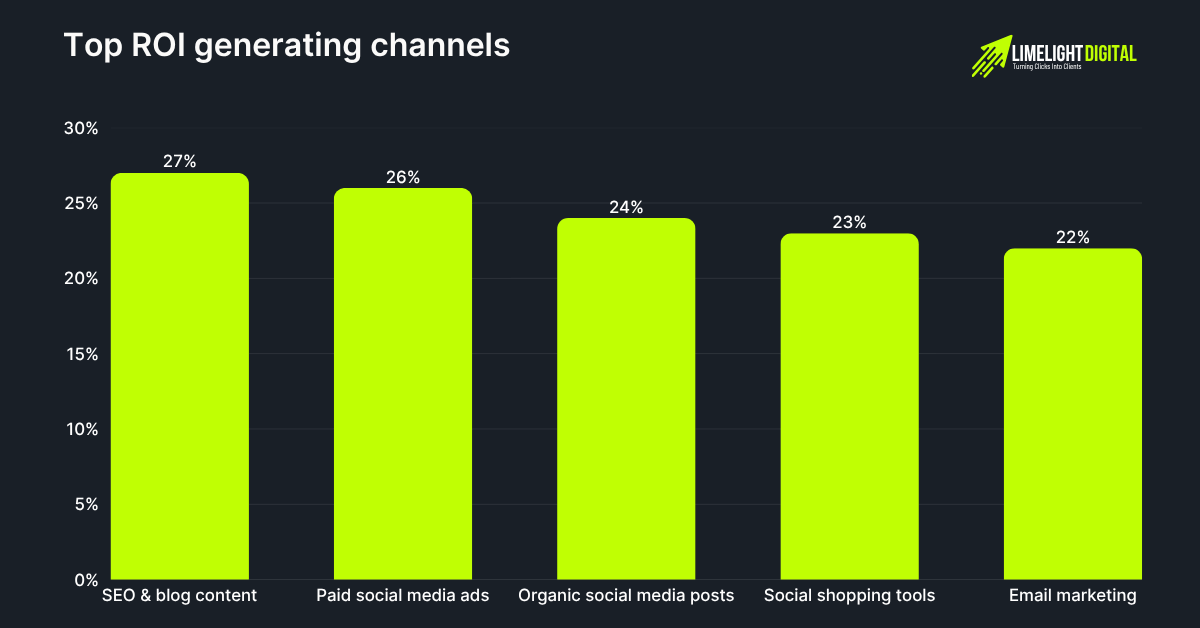
| Marketing Channel | ROI (%) |
|---|---|
| Website/blog/SEO (search engine optimization) | 27% |
| Paid social media content | 26% |
| Organic social media content | 24% |
| Social media shopping tools (e.g., Instagram Shops) | 23% |
| Email marketing | 22% |
To better understand how organic channels drive long-term growth, explore these detailed insights on SEO ROI statistics and how SEO consistently delivers higher conversion rates and returns.
Lead Generation Challenges Statistics
58% of marketers say their biggest struggle is finding high-quality prospects, and 42% of businesses cite low-quality leads as a significant challenge. 79% of marketing leads fail to ever convert into sales opportunities.
Source: Reach Marketing, Trustmary
On average, 13% of B2B leads convert to opportunities, and the average time to reach a conversion is 84 days. Only 6% of opportunities then convert to sales, taking an average of 18 days.
Source: Lohre
67% of lost sales opportunities stem directly from sales reps not properly qualifying leads before pursuit.
Source: LinkedIn
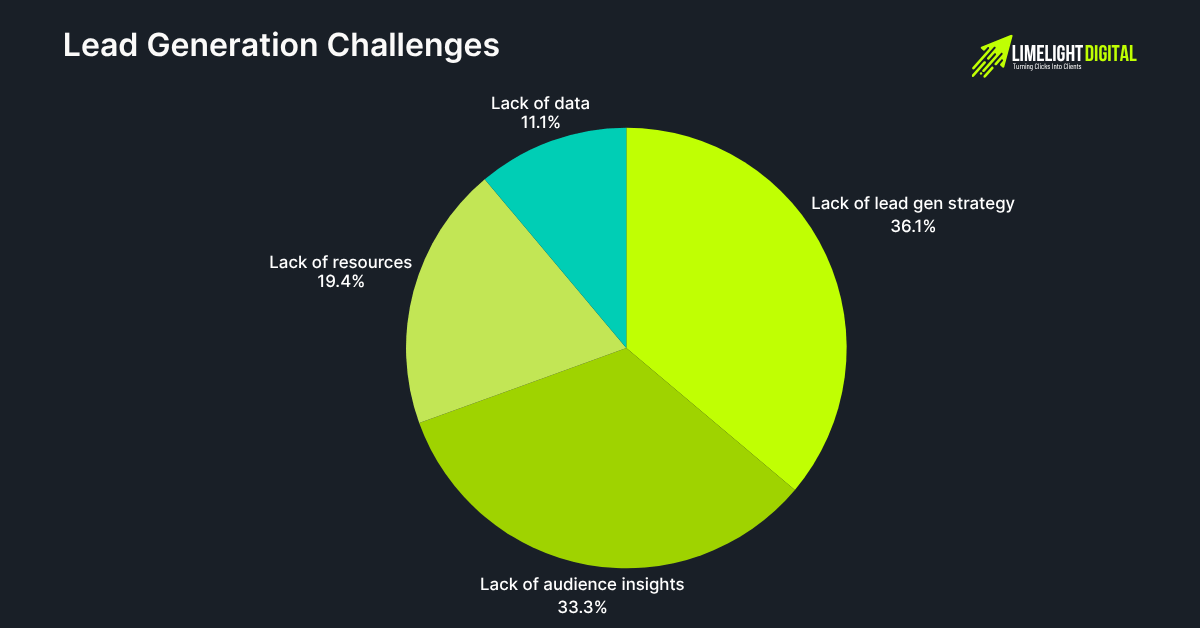
36.1% of companies cite a lack of strategic approach as their primary lead generation challenge, while 33.3% emphasise difficulties posed by insufficient audience understanding.
| Barrier | Percentage |
|---|---|
| Lack of lead gen strategy | 36.1% |
| Lack of audience insights | 33.3% |
| Lack of resources | 19.4% |
| Lack of data | 11.1% |
Source: Databox
41% of demand generation practitioners report difficulties measuring their programme results. 39% cite making data actionable as their struggle.
Source: AMA
Lead Generation Strategies Backed By Data
The following strategies are directly supported by performance data, giving marketers a reliable blueprint for 2026.
Content marketing is 62% cheaper than other marketing channels. SEO generates 1,000% more organic traffic than social media. Organic search delivers approximately 44.6% of all digital revenue attribution.
Whitepapers convert at 12-20%, webinars at 38%, and case studies increase close rates by 70%. B2B buyers consume 3 to 7 pieces of content before connecting with sales, and 93% search online before purchasing.
Source: Marketing LTB
69% of high-performing companies use AI for lead generation. AI improves qualification accuracy by 40%, qualification speed by 3x, and conversion rates by 25-35%. Companies without AI are at a competitive disadvantage in 2026.
Source: Super AGI, Cirrus Insights
80% of marketers currently use AI for content creation, and 75% use it for media production
Source: HubSpot
Responding to a lead within 5 minutes increases contact rates by 900%. Multi-channel follow-up increases conversions by 3x. CRM adoption increases pipeline visibility by 60-80%.
Source: Marketing LTB
Future Of Lead Generation (2026 And Beyond)
Lead generation is entering a new era defined by AI, privacy, buyer autonomy, and channel convergence. Here is what the data forecasts:
AI search engines (ChatGPT, Perplexity, Claude) are becoming primary B2B research tools, making Generative Engine Optimisation (GEO) essential alongside traditional SEO in 2026. Companies must now optimise for AI citations as well as Google rankings.
By 2026, 89% of marketing experts expect up to 75% of email strategy operations to be fully AI-driven. 94% of marketers plan to use AI in content creation by 2026. These trends point toward hyper-personalised, automated lead experiences at scale.
Source: HubSpot
For businesses entering competitive markets, these startup statistics reveal key challenges and opportunities that directly impact lead generation success.
The global B2B lead generation market is projected to grow from $12.50 billion in 2026 to $32.85 billion by 2035, reflecting a strong compound annual growth rate (CAGR) of 11.33% over the forecast period.
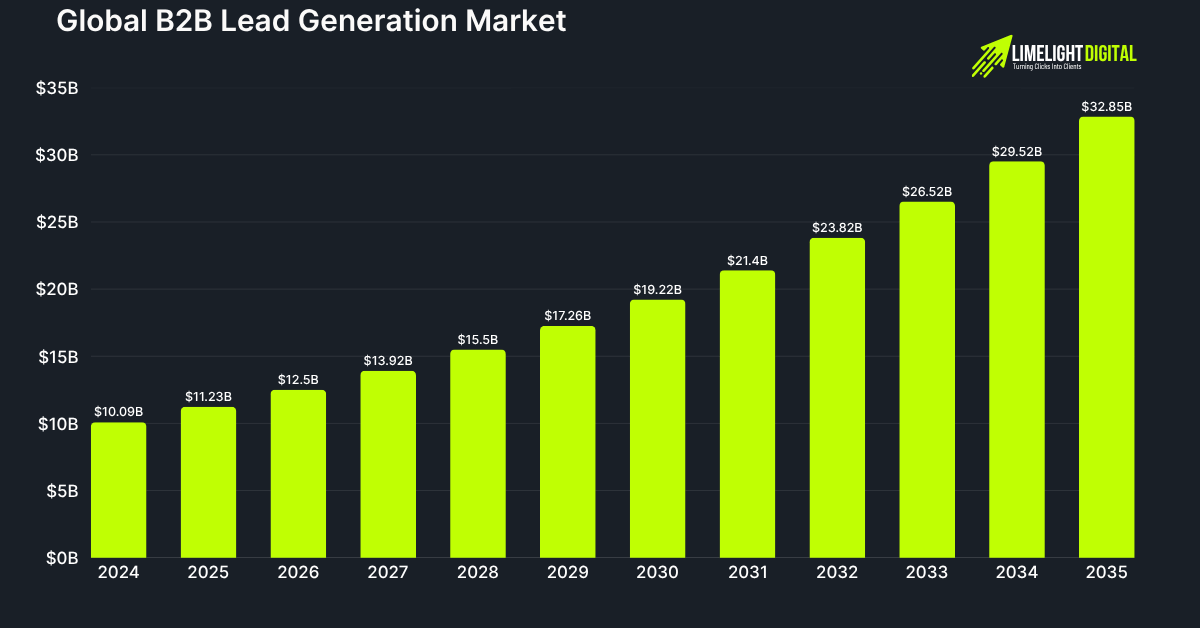
This steady growth indicates that the market is expected to nearly triple in size over the next decade, highlighting increasing demand for data-driven marketing and sales solutions among businesses worldwide.
| Year | Market Size |
|---|---|
| 2024 | $10.09 billion |
| 2025 | $11.23 billion* |
| 2026 | $12.50 billion* |
| 2027 | $13.92 billion* |
| 2028 | $15.50 billion* |
| 2029 | $17.26 billion* |
| 2030 | $19.22 billion* |
| 2031 | $21.40 billion* |
| 2032 | $23.82 billion* |
| 2033 | $26.52 billion* |
| 2034 | $29.52 billion* |
| 2035 | $32.85 billion* |
*Estimated Figure
Source: Market Research Future