There are an estimated 1 in 7 individuals suffering from mental disorders globally, which amounts to 1.186 billion people. Of these, depression and anxiety make up the majority of the disorders in all regions around the world.
Despite this, more than 71% of people with these disorders go untreated, and the economic impact will be about $6 trillion each year by 2030.
Here’s a detailed statistical report on global and regional mental health data.
Mental Health Statistics: Key Highlights
- 1 in 7 people globally live with a mental health disorder.
- Depression affects 332 million people worldwide.
- Suicide claims more than 720,000 lives annually.
- 71% of people with mental health conditions never receive treatment.
- Among U.S. adults, mental illness prevalence reaches 36.2%.
- The cumulative economic cost of mental health disorders is projected to reach around $6 trillion per year by 2030.
Mental Health Statistics Worldwide
According to the World Health Organization, 1 in 7 people are living with a mental health disorder worldwide.
Source: WHO
As per the current population of 8.3 billion, that translates to 1.186 billion people.
Source: Worldometer
Depression alone affects an estimated 332 million people globally. Anxiety disorders impact approximately 301 million people. Together, these two conditions account for the largest share of mental health burden in every region of the world.
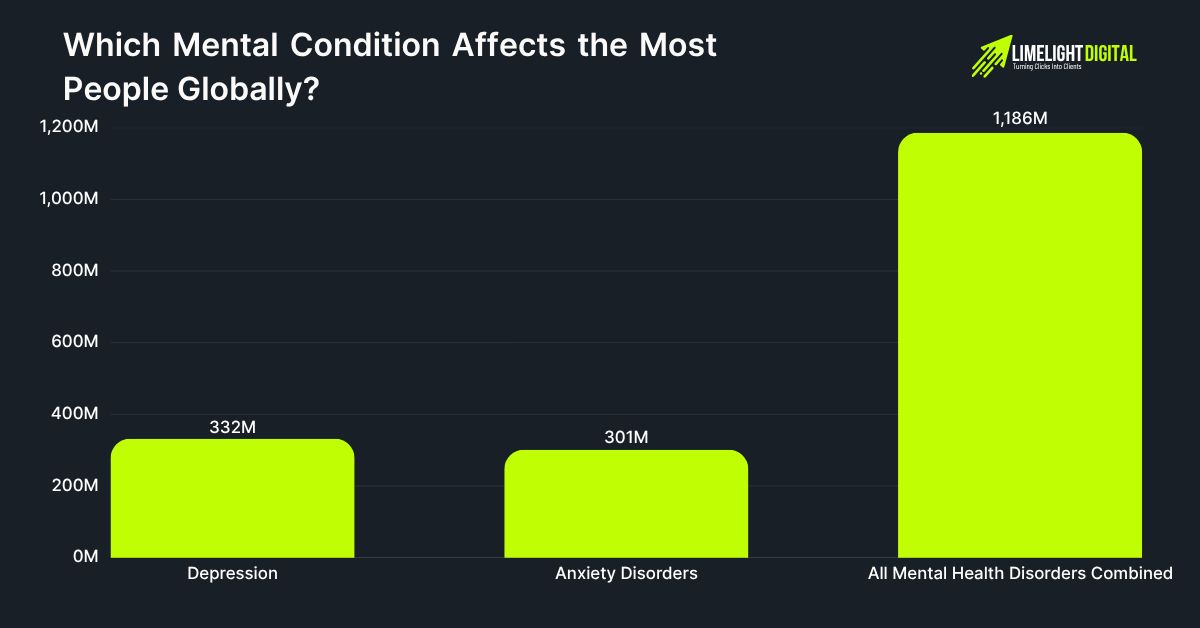
The following table breaks down the estimated number of people affected by the world’s most prevalent mental health conditions:
| Condition | Global Population Affected |
|---|---|
| Depression | 332 million |
| Anxiety Disorders | 301 million |
| All Mental Health Disorders Combined | 1,186 million |
Source: WHO 2, Singlecare
The financial toll is also staggering. The cumulative economic cost is projected to reach roughly $6 trillion per year by 2030.
Source: ScienceDirect
More than 720,000 individuals commit suicide annually, thus becoming one of the top three causes of death among persons aged 15 to 29.
The following is a table representing various global statistics on mental health conditions, such as the number of suicide deaths each year, their demography, and economic costs:
| Global Mental Health Metric | Figure |
|---|---|
| Annual suicide deaths | 720,000 |
| Suicide ranking among ages 15-29 | 3rd leading cause of death |
| Projected economic cost by 2030 | $6 trillion/year |
| The government health budget allocated to mental health | 1% globally |
Source: WHO, World Metrics
Just around 10 percent of individuals suffering from mental disorders in low- and middle-income countries have received appropriate care. It is equally alarming in the case of higher-income countries as well. In the USA, around 29.5 million adult individuals with mental disorders have not received treatment in 2024.
Source: Hello Inner Well, World Metrics
UK Mental Health Statistics
It is estimated that one in four people in England experiences mental disorders every year. The survey found that about 22.6 percent of adults aged between 16 and 64 years have common mental disorders, and these disorders primarily consist of depression and anxiety.
Source: Mind, Skills Training Group
Prevalence among young adults aged 16 to 24 years has increased from 17.5% in 2007 to 25.8% in 2023/24. This is an aggressive trend by any standard among a single age group in less than two decades.
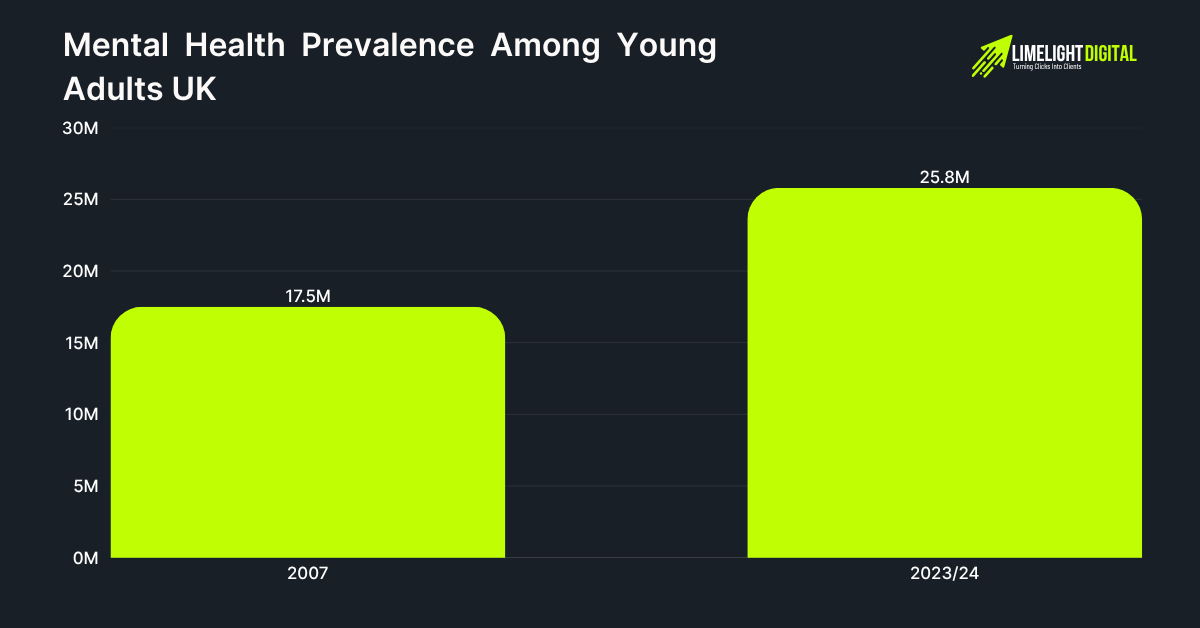
The table below shows the changes in the prevalence of mental ill-health among UK adults aged 16-24 years over the last two decades:
| Year | Prevalence Among Adults Aged 16-24 |
|---|---|
| 2007 | 17.5% |
| 2023/24 | 25.8% |
Source: Center For Mental Health
One-third of adults said that they felt mentally unwell compared to before the onset of COVID-19. Mental health problems have impacted the most vulnerable people, who comprise poor people, minority groups, and people with prior issues.
Source: Mind
Service-wise, only one out of eight adults with mental health issues is receiving any form of treatment. The mental health waiting list had risen to 1.7 million individuals in the year 2025.
Source: Skills Training Group, BMA
However, the share of mental health in the total NHS budget has been declining, from 8.78% in 2024/25 to an estimated 8.4% in 2026/27, despite NHS mental health expenditure having reached its target of £16.1 billion in 2026/27.
Source: World Data
Mental Health Demographics
There is no equal distribution of mental illnesses in people. Gender, age, ethnicity, and financial status all determine the susceptibility of the individual to certain forms of mental illness.
Men’s Mental Health Statistics
For instance, the proportion of suicides attributed to men in America stands at about 79%, although men have fewer cases of mental disorders than women.
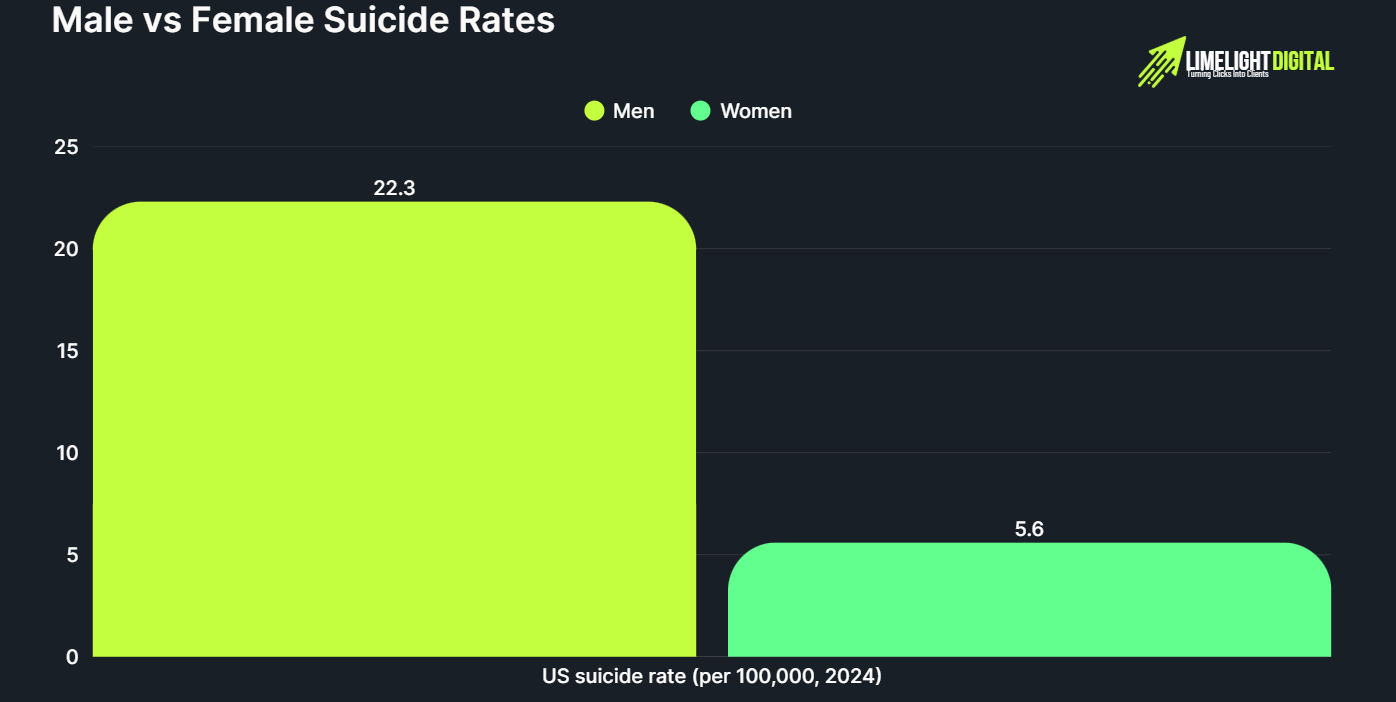
The male suicide death rate is roughly four times higher than that of women, at 22.3 versus 5.6 per 100,000 people in 2024.
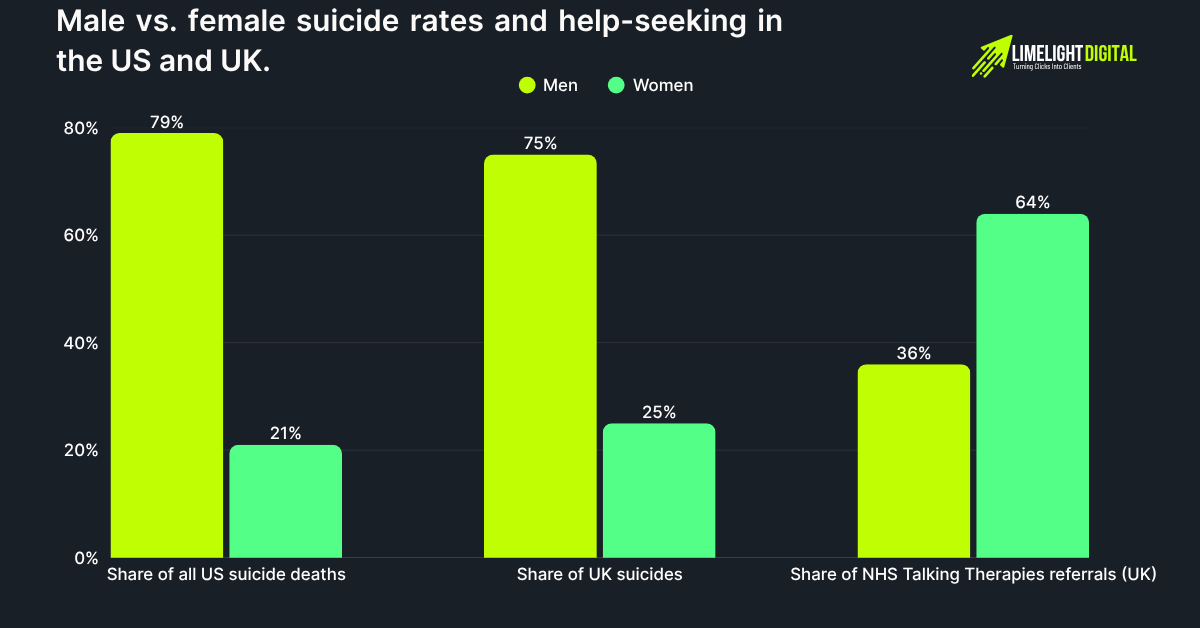
Comparison between male and female suicide rates and help-seeking behaviour in the US and UK:
| Metric | Men | Women |
|---|---|---|
| US suicide rate (per 100,000, 2024) | 22.3 | 5.6 |
| Share of all US suicide deaths | 79% | 21% |
| Share of UK suicides | 75% | 25% |
| Share of NHS Talking Therapies referrals (UK) | 36% | 64% |
In the UK, the pattern is similar. Men account for approximately 75% of all suicides, and only 36% of NHS Talking Therapies referrals are for men.
Source: Mental Health
Part of the problem is visibility, as men often delay seeking treatment for mental health symptoms by an average of 11 years after onset.
Source: MH Stats
15% of men report having zero close friends, a 5X increase since 1990. This “friendship recession,” as researchers have called it, correlates directly with adverse mental health outcomes.
Source: AIBM
Youth Mental Health Statistics
While only 23.4% of U.S. adults reported suffering from any mental disorder in the previous year, the percentage was 36.2% for young adults between 18 and 25 years old, more than three times the rate among adults aged 50 and above.
Source: Hello Inner Well, Leal Mind
Among those aged 18 to 25, 15.9% had a major depressive episode in 2024, nearly twice the overall adult rate.
Source: Hello Inner Well
Women’s Mental Health Statistics
26.7% of U.S. women experience mental illness annually, compared to 20.0% of men. Women are roughly twice as likely to be diagnosed with both depression and anxiety disorders.
Source: NAMI, South Denver Therapy
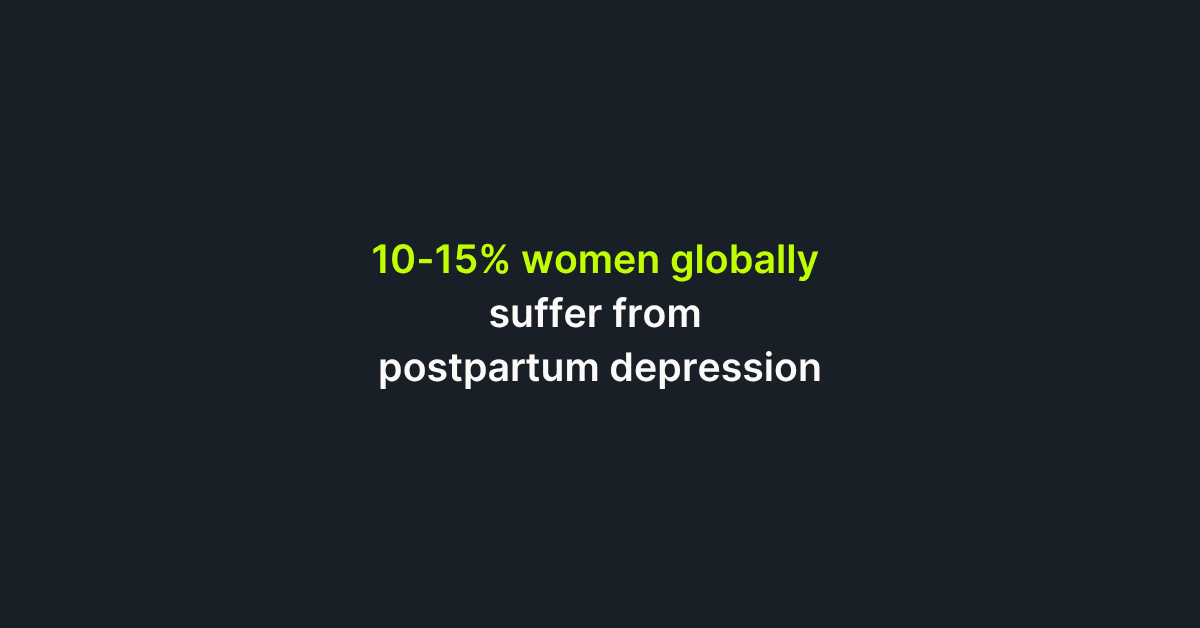
Postpartum depression alone affects 10 to 15% of women globally after childbirth, with higher rates in developing countries.
Source: Worldmetrics
Research shows that 53% of women with mental health problems have also experienced some form of abuse. Women are approximately three times more likely than men to develop PTSD following a traumatic event.
Source: South Denver Therapy
Teen Mental Health Statistics
Approximately 40% of U.S. high school students reported persistent feelings of sadness or hopelessness in 2023. Among teen girls, that figure rises to over 53%. For LGBTQ+ youth, it reaches 66%.
Source: MTP Psychiatry
UK Depression Rate
Before COVID-19, 10% of adults in Great Britain reported moderate or severe depressive symptoms. By early 2021, that figure peaked at 21%.
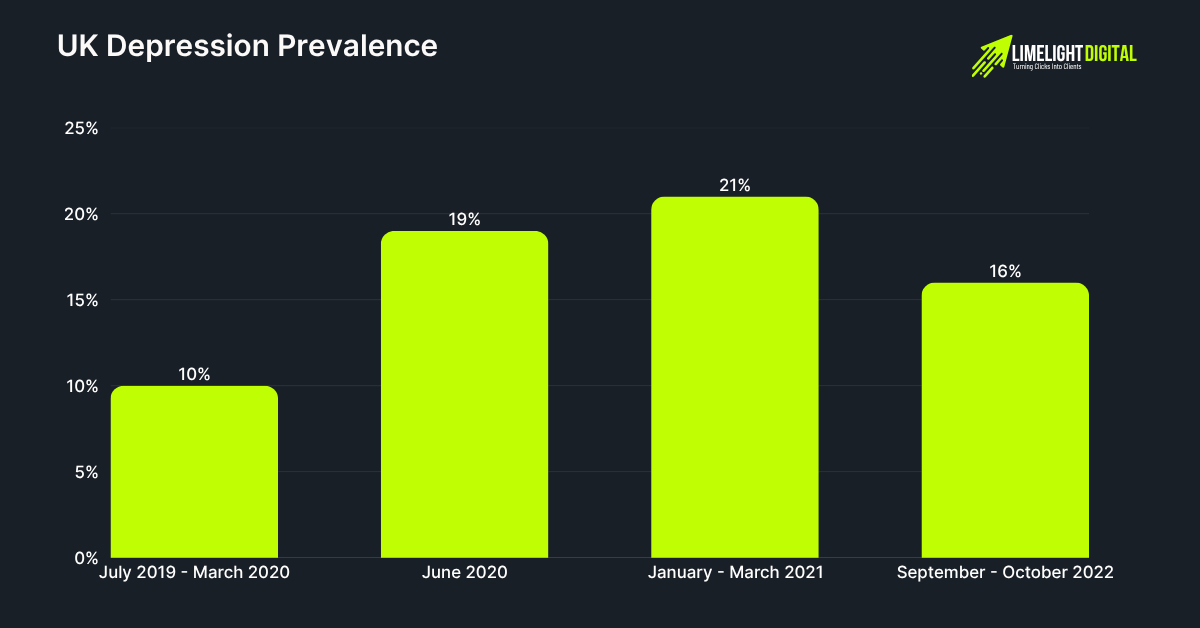
Here is a table outlining how depression rates in Great Britain changed before, during, and after the COVID-19 pandemic:
| Survey Period | Prevalence (%) |
|---|---|
| July 2019 – March 2020 | 10% |
| June 2020 | 19% |
| January – March 2021 | 21% |
| September – October 2022 | 16% |
Source: Commons Library
Types Of Mental Illness
The WHO recognises several major categories. These include anxiety disorders, mood disorders such as depression and bipolar disorder, psychotic disorders like schizophrenia, eating disorders, neurodevelopmental conditions such as ADHD and autism, and substance use disorders.
Mental disorders have risen from the 12th to the 5th leading cause of health loss worldwide between 1990 and 2023. That rapid climb up the rankings reflects both increasing prevalence and growing recognition of conditions that were previously underdiagnosed.
Source: Leal Mind
Most Common Mental Illnesses
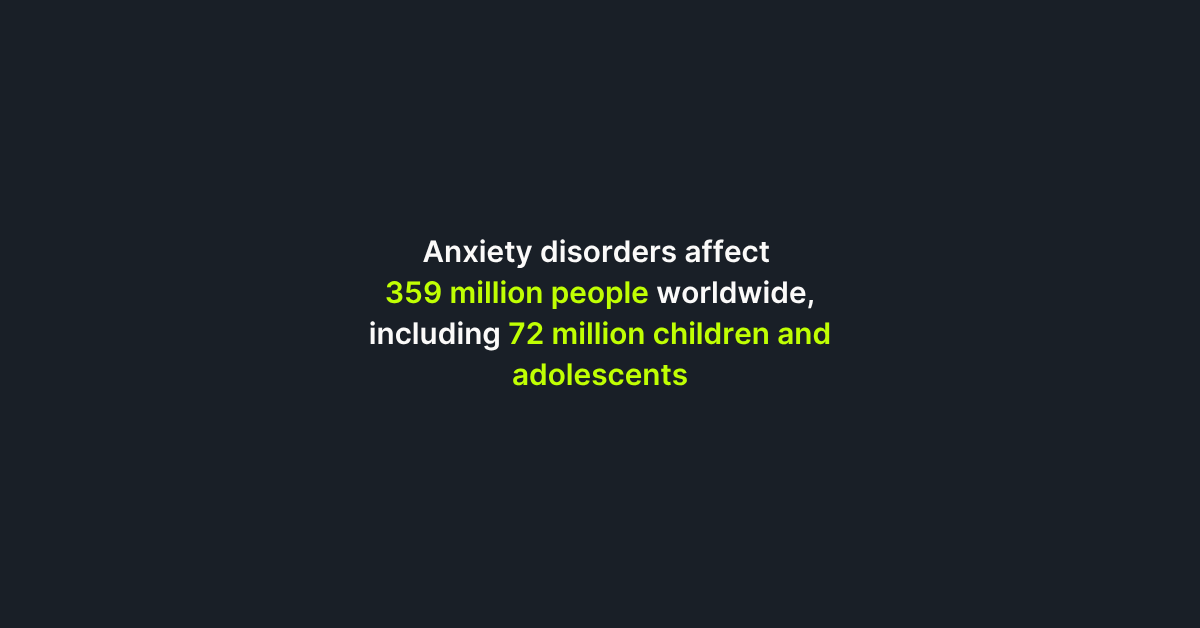
Anxiety disorders are the single most prevalent mental health condition. They affect approximately 359 million people worldwide, including 72 million children and adolescents. In the United States alone, 42.5 million Americans report suffering from an anxiety disorder.
Depressive disorders follow close behind, being the second largest category of disorders, with about 322 million people affected globally. Depression has become the most common cause of disabilities across the world and affects more females (201.3 million people) than males (131.1 million people).
2% of people have been affected by bipolar disorder, based on surveys conducted in the UK. The prevalence rate for psychotic disorders is even lower; only 0.7% of the population has had a psychotic disorder in the last year.
Source: Commons Library
Social Media And Mental Health Statistics
48% of U.S. teenagers consider the impact of social media on their peers to be mainly negative compared to 32% in 2022.
This is a 16-point swing within just three years, indicating that teenagers are starting to realize the negative consequences of social media usage on themselves.
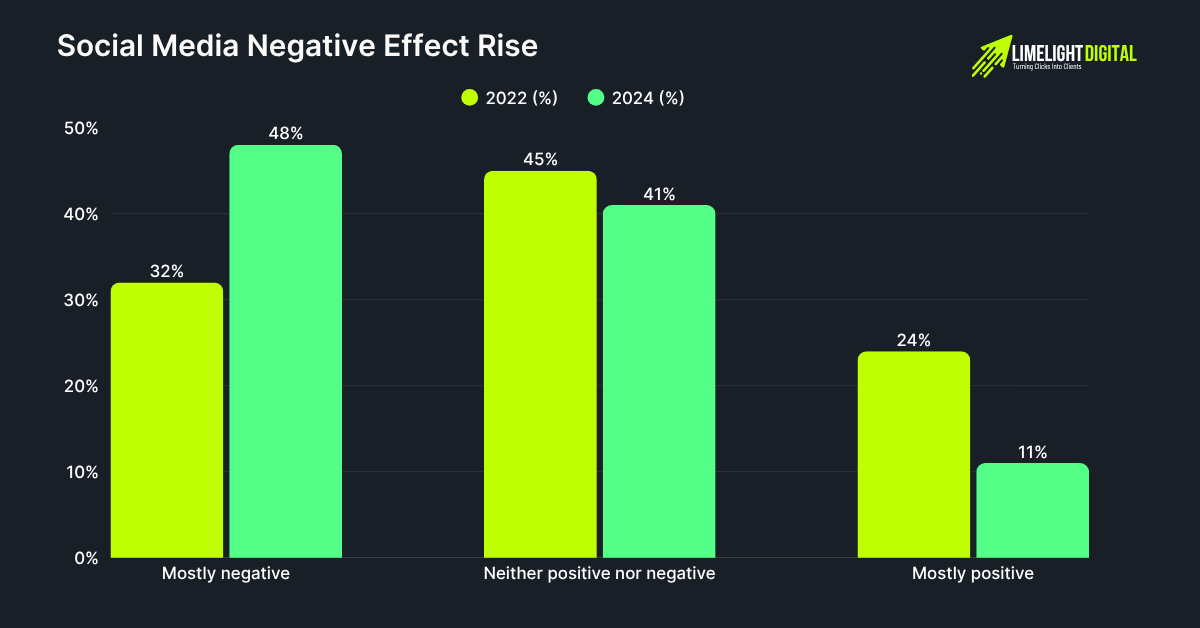
The following table gives an overview of the change in opinion about the effect of social media on the psychological health of teenagers from 2022 to 2024:
| Response | 2022 (%) | 2024 (%) |
|---|---|---|
| Mostly negative | 32% | 48% |
| Neither positive nor negative | 45% | 41% |
| Mostly positive | 24% | 11% |
Source: Pew Research Center
Adolescents who spend more than three hours a day on social media are twice as likely to experience poor mental health outcomes.
Source: Singlecare
Sleep is a key mechanism through which social media causes harm. 45% of teens say social media hurts the amount of sleep they get.
Source: Pew Research Center
Meanwhile, 93% of Gen Z adults admit to losing sleep because they stayed up past their intended bedtime scrolling.
Source: AASM
Australia’s under-16 social media ban took effect on 10 December 2025. In the U.S., fourteen state attorneys general filed lawsuits against TikTok in late 2024. In March 2026, Meta and Google were ordered to pay at least $3 million in a social media addiction lawsuit.
Mental Health Issues Treatment Statistics
Worldwide, nearly 71% of individuals suffering from mental/emotional disorders do not get treatment. Within the U.S., out of the 61.5 million Americans having a mental disorder in 2024, about 52% have had any sort of medical intervention.
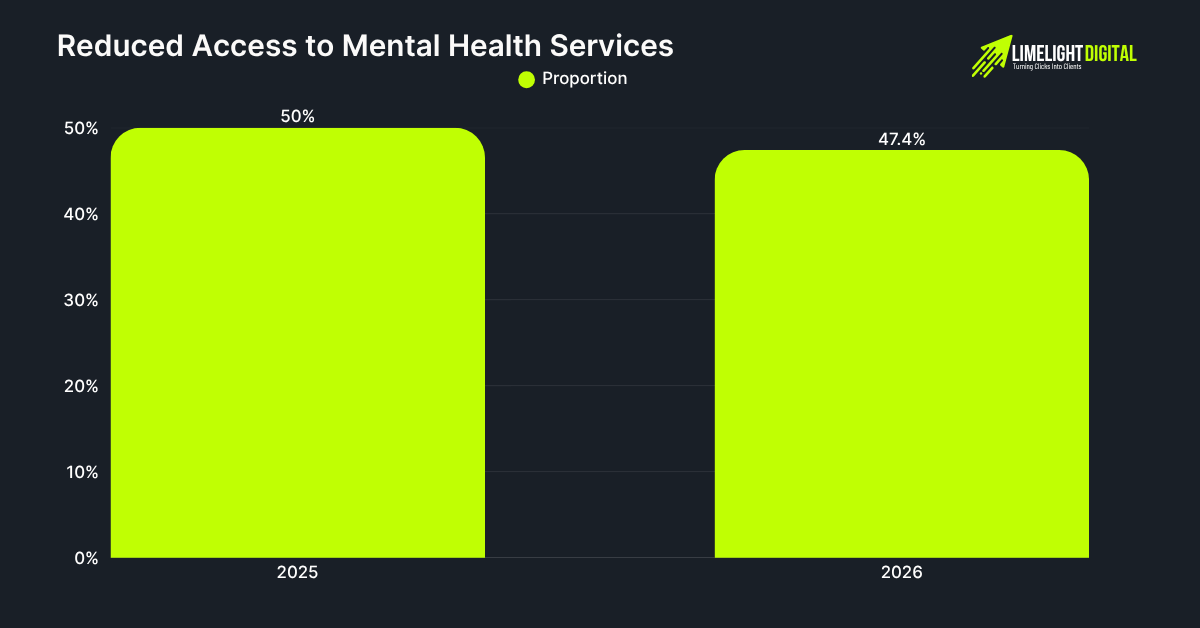
The proportion of people receiving treatment has been decreasing slightly, from 50% in 2025 to 47.4% in 2026, as shown by the findings of a survey conducted on over 2,000 Americans.
Source: Anova Therapy, Hello Inner Well, Rula
Workforce shortages deepen the problem. Approximately 40% of the U.S. population lives in a mental health professional shortage area, and 46% of psychologists were not accepting new patients as of 2025.
In rural America, 60% of residents lack access to any mental health provider.
Source: Clinic Mind, APA, Worldmetrics
Cost is a primary barrier. The financial obstacle was cited by 41% of respondents in 2026, a sharp increase from 25% just a year earlier.
Source: Rula
For those earning under $50,000 annually, the burden is even heavier. Private therapy in the United States averages $150 to $250 per session, making consistent treatment unaffordable for many.
Source: When Notes Fly