Marketing your eCommerce store in 2026 involves combining SEO, paid advertising, social media, email, and content marketing efforts into one cohesive marketing strategy rather than managing all the channels separately.
Global eCommerce sales are projected to reach between $6.9 trillion and $7.4 trillion this year. With rising competition, successful stores rely on clear, repeatable systems rather than isolated, one-off promotions.
The guide provides details on marketing an online shop in 2026 effectively, ways to develop a marketing strategy based on those techniques, common mistakes one should avoid making, and current trends.
10 Best Ways to Market Your eCommerce Store in 2026
The tactics below cover organic and paid channels. Most successful stores use a mix of several, not just one.
Optimize Your Store for SEO
SEO provides free, continuous traffic to your online store because you will be ranked in the Google search engine with your product and category pages. Industry benchmarks show SEO yields an average return of $22.24 per $1 spent over a multi-year timeframe.
Data from our SEO ROI statistics also shows that organic search ROI is 2–3× higher than paid campaigns over a year. Since it is not paid traffic like advertisements, SEO becomes one of the most profitable sources for eCommerce marketing.
Firstly, start with keyword research to find out what your consumers actually search for on Google before making the purchase. Then implement these keywords into product titles, meta descriptions, category pages, and alt image text.
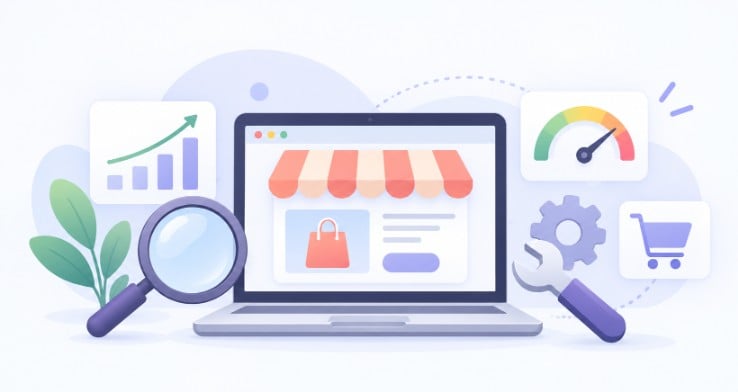
Site speed and mobile usability have a direct impact on the ranking of websites, and a poor site speed or mobile checkout process may affect both the ranking and conversions, even with great content.
Basic technical elements that can also make the difference include having clean URLs, an up-to-date XML sitemap, and interlinking of products.
Use Google Shopping and Search Ads
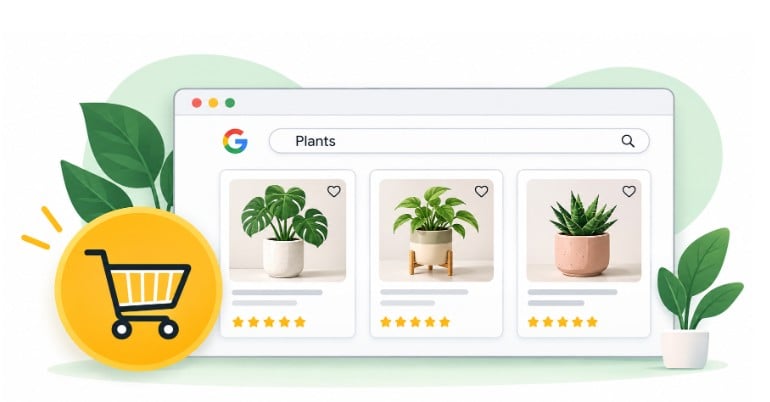
The advantage of Google Shopping ads is that the picture of the product, the price of the product, and the name of the store appear right on the search results page, usually above the organic results.
Search advertising will complement your Shopping campaigns as they involve keyword targeting of your products using text ads. Plan for a reasonable budget, utilize negative keywords in order to avoid wastage, and frequently update your product feeds because otherwise Google might decline your listing due to incomplete or incorrect information.
Regulated or age-restricted products often face stricter ad rules, so brands in those categories tend to lean more on their own website and organic search.
For example, niche retailers operating under ad platform restrictions, such as a UK-based online vape store like Pirate Vapes, must rely primarily on a comprehensive product catalog, technical SEO, and educational content to drive organic traffic.
Build a Social Media Marketing Strategy
Social media marketing involves choosing two to three social media sites where your customers spend most of their time, instead of trying to be active on all of them. Instagram and TikTok are good for products that appeal to visual or lifestyle aspects, whereas Facebook and Pinterest fit better for home and fashion products.
In 2026, short-form video will have the highest engagement on any platform. Social commerce will be a factor with features such as in-app checkouts available on platforms like Instagram and TikTok Shop. You can track your engagement rates and click-through rates on a per-platform basis to direct your efforts where they’ll pay off.
Try Influencer Marketing
Influencer marketing is successful because it uses the existing trust that a content creator has built with his/her followers, and when an influencer recommends something to customers following him/her, it tends to convert better than a regular advertisement.

Micro-influencers (with followers ranging from 10,000 to 100,000) will have better engagement rates and lower costs than macro-creators. Provide each of your influencers with their own discount codes and/or affiliate links so that you can see how many sales are made through them. Be sure to disclose any paid partnerships as required by the FTC.
Use Email Marketing
Email marketing is still one of the highest ROI channels for eCommerce. Email marketing generates an average ROI of $36 to $42 for every $1 spent, driving 9% to 31% of total eCommerce revenue. In comparison to social media, changing algorithms cannot prevent your connection with subscribers.
Segment your list according to buying patterns, browsing activity, and engagement to keep things relevant. Examples of highly converting automated email sequences are abandoned cart emails, follow-up emails after purchase, and win-back email sequences for non-active customers.

Keep subject lines specific and avoid over-promising, since spam filters and subscribers both respond poorly to exaggerated claims.
Create Content That Helps Shoppers
Content marketing produces 3x more leads than traditional outbound marketing while costing 62% less. Video content delivers measurable ROI 49% faster than text-only articles.
Content marketing involves publishing buying guides, comparisons, and how-to content that answers the questions that consumers may have both before and after they make their purchase. This helps build organic traffic and creates the image of a trusted source rather than just another place to shop.
For example, specialist retailers can use educational content to guide business customers toward relevant product categories. Pirate Vapes, a UK-based vape retailer, offers wholesale vape kits for businesses looking to purchase vape devices in larger quantities, making a dedicated category page useful for customers comparing products, specifications, and available options.
Content marketing will also offer you the chance to link related products within the post, which will help in SEO and cross-selling.
Use Customer Reviews and User-Generated Content
Reviews and user-generated content build trust because they come from actual consumers, instead of the brand itself. According to a Harvard Business School academic working paper, a one-star increase in a business’s online review rating leads to a 5% to 9% increase in revenue.
Product pages that have visible reviews perform much better, and often people even check out the star ratings before putting something into their shopping basket.

Send out requests for feedback via email a few days after the delivery of the product. Customer photos and videos can be used on your social media and even on the product page, since they provide proof of actual use rather than staged pictures taken in a studio.
Handle negative feedback in a professional and public manner. The way that a brand handles criticism can be just as convincing as the review itself.
Run Retargeting Campaigns
Retargeting means marketing by presenting advertisements to people who have visited your website before but have not bought anything from there. These people are already aware of your brand name, and this is why retargeting is more likely to succeed compared to other advertisements.
Develop a retargeting campaign through the Google Display Network and/or Meta, and segment your target market depending on what they have done. The consumer who has left your website without buying anything will most likely purchase more than someone who visited the home page only; therefore, create an approach that offers a small discount or free shipping.
Cap how often the same ad shows to one person. Too much frequency turns a helpful reminder into an annoyance. Retargeted store visitors are 70% more likely to convert compared to cold traffic because of existing brand awareness.
Start an Affiliate Marketing Program
Under an affiliate program, the partner is paid a commission based on sales made through their unique URL, which means that there is no risk in paying for performance rather than exposure. It makes it a low-risk strategy for growing your marketing network outside your target market.
Bloggers, comparison sites, and content creators in your niche can all serve as affiliates. Set clear commission rates, provide affiliates with product images and copy, and use affiliate software or a network to track sales accurately.
A well-run affiliate program can become a steady source of traffic and sales without the ongoing ad spend that paid channels require.
Offer Promotions and Discounts
Discounts and promotions create surges in sales and also serve to introduce new customers who have been on the edge for quite some time. Special promotions like limited-time offers, first-time purchase offers, and bundles are all meant to ensure that customers make their purchase.
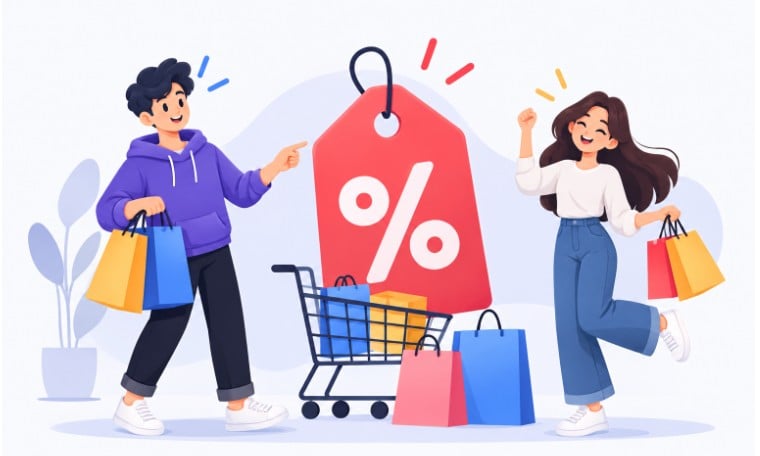
Time promotions around major retail seasons, but also conduct some surprise discounts at other times during the year to avoid allowing customers to simply wait for the next discount.
Discounts to loyal customers can help with retention, which will usually be cheaper than trying to attract new ones.
Track margin carefully. A discount that drives volume but erases profit isn’t a win.
Also check out: Digital marketing tools for small business
How to Create an eCommerce Marketing Strategy
Building a strategy means connecting these individual tactics into a plan with clear goals, rather than running them separately.
- Define your goal. Make sure to determine whether it is customer acquisition, repeat business, or order value that you want to emphasize, as this determines which marketing channels should get the highest allocation of funds.
- Know your customer. Build a simple profile of who buys from you, what they care about, and where they spend time online before choosing channels.
- Pick two or three primary channels. Trying to do all channels perfectly with a small team usually ends up with none being done correctly. Start focused, then expand.
- Set a budget by channel. Split spending according to where your data tells you to get the best bang for your buck, and do so quarterly.
- Create a content and posting calendar. Consistency matters more than volume for both social media and email.
- Track the right metrics. Watch conversion rates, customer acquisition costs, and lifetime values of customers, not just traffic or followers.
- Review and adjust monthly. Cut what isn’t working and put more budget behind what is.
Common eCommerce Marketing Mistakes to Avoid
Avoiding common mistakes can help your eCommerce store attract customers, build trust, and increase sales.
- Ignoring the mobile experience: Since most eCommerce traffic comes from mobiles, an inconvenient checkout procedure silently ruins conversion rates even before the customers make a purchase.
- Running ads without tracking conversions. Without conversion tracking set up properly, you won’t be able to know what ads are really making money or just generating clicks.
- Treating every channel the same way. A piece of content that is successful on Instagram won’t necessarily be successful on LinkedIn or in an email.
- Discounting too often. Frequent sales train customers to wait for the next one instead of buying at full price.
- Neglecting existing customers. Since acquisition is costly relative to retention, an approach centered on attracting new customers overlooks potential profits.
- Skipping SEO basics. The absence of meta descriptions, slow page loading speed, and poor product pages limit ranking success despite good marketing efforts.
eCommerce Marketing Trends to Watch in 2026
Emerging trends like AI shopping, social commerce, personalization, and video are reshaping eCommerce marketing in 2026.
- AI-assisted shopping and search. As more and more buyers turn to artificial intelligence and chat-enabled search, the need for clear product content becomes crucial.
- Social commerce growth. Checkout in-app on sites such as TikTok and Instagram is still growing, reducing the steps needed from discovery to purchasing.
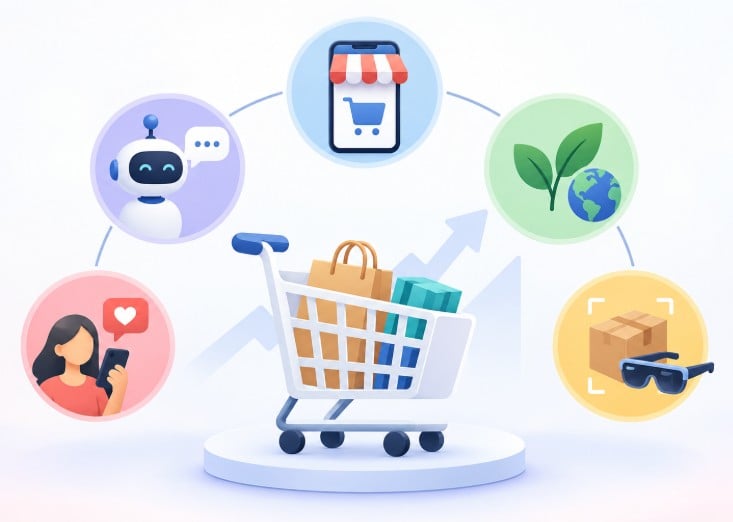
- Short-form video as a primary format. Most social media platforms show that video content is performing better than image content.
- First-party data reliance. As third-party cookies continue to go away, the value of email list subscribers, SMS subscribers, and actual customer information is increasing.
- Personalization at scale. Customized product recommendations and emails according to each customer’s browsing and purchasing behavior have become routine, not an added value.
- Sustainability and transparency. More consumers are becoming conscious about the sources, materials, and shipping methods of the products before purchasing them.
- In-App Social Commerce: Social platforms are closing the friction gap with native checkouts. TikTok Shop US grew 108% YoY to $15.8B.
Conclusion: Market your eCommerce store with SEO, social media, paid ads, email, content, and influencer marketing
There’s no single channel that carries an eCommerce store’s marketing on its own in 2026. SEO and content bring in free, long-term traffic. Paid ads and retargeting capture demand from people ready to buy. Social media and influencer partnerships build awareness and trust. Email keeps your existing customers coming back.
The stores that grow steadily are the ones that combine these channels into one strategy, track what’s actually working, and adjust their budget based on real data rather than guesswork.
FAQs
Yes. Margin is dependent on niche, competition, and efficient cost management, but total sales through global online retailing this year are expected to be close to $6.9 trillion.
It is a model based on three core messages, three different audience groups, and three marketing media to ensure that the messaging is kept focused and not diluted.
AI-assisted product searches, rise of social commerce, short-form videos taking precedence in content, first-party consumer data, and enhanced personalization of recommendations.
Consumer electronics and fashion are the leading categories in terms of overall sales volume worldwide, just behind food & beverages and health & beauty care products.
The electronics and fashion categories contribute the most revenue in terms of numbers, but the margin is usually higher for the beauty and health sector.
In the case of drop shipping and print-on-demand, no inventory needs to be kept beforehand; however, both offer lower profit margins compared to keeping inventory yourself.