Brand Awareness is no longer just about recall. It’s one of the biggest enablers of consumer trust, loyalty & revenue generation today, according to Statista. With 81% of consumers stating that you need to trust a brand before purchasing anything from them, authenticity, visual identity & consistency are just as important as your product’s quality when it comes to driving their decision-making process.
Here’s our complete statistical report on Brand Awareness, including statistics related to Trust, Consistency, Visual Branding, Social Media & ROI!
Top Brand Awareness Statistics (Quick Overview)
- 88% of consumers say authenticity influences brand preference.
- 91% of consumers reward authentic brands with purchases.
- 81% of consumers must trust a brand before buying.
- Brand consistency can increase revenue by up to 23%.
- 94% of first impressions are design-related.
Brand Authenticity Statistics
88% of consumers say authenticity is important when deciding which brands they like and support, while 92% of marketers now believe brand authenticity is essential to their strategy.
91% of consumers say they would reward a brand for its authenticity by making a purchase, making authentic communication a direct revenue lever, not merely a reputation play.
60% of consumers are more likely to buy from brands that demonstrate high levels of authenticity, and 78% say that seeing behind-the-scenes content makes them feel more connected to a brand.
Source: Gitnux, Energy PR, Cropink
64% of consumers say shared values are the primary reason they maintain a relationship with a brand.
However, only 27% say their trust increases when a brand focuses solely on products while ignoring culture.
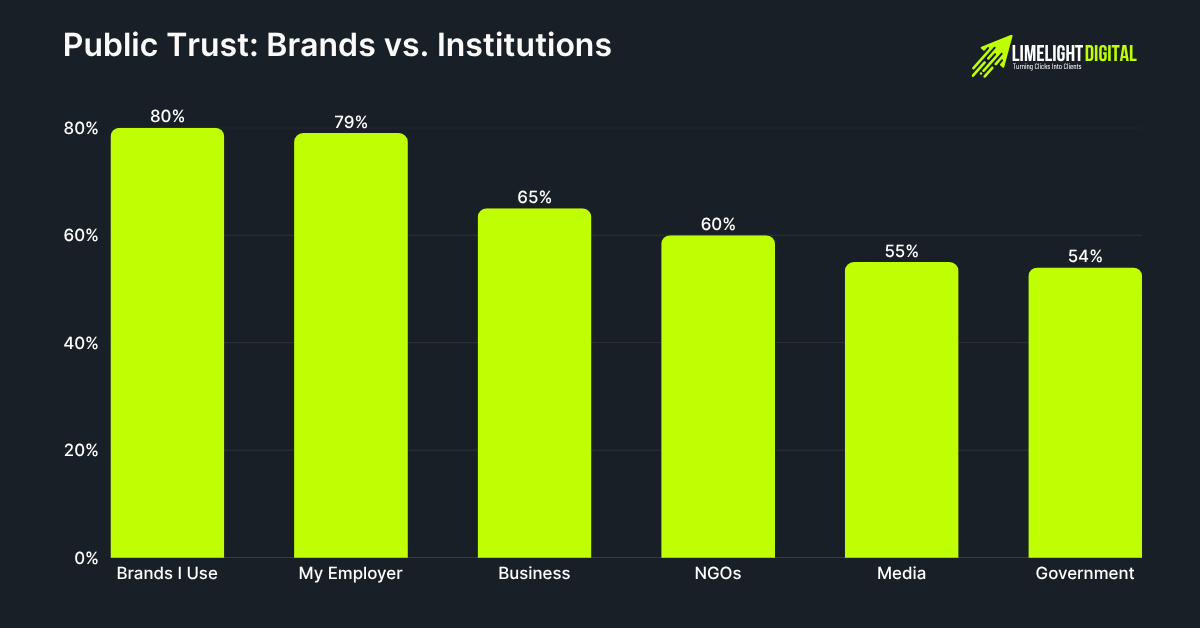
Here’s how the public trusts brands vs institutions:
| Institution | Trust |
|---|---|
| Brands I Use | 80% |
| My Employer | 79% |
| Business | 65% |
| NGOs | 60% |
| Media | 55% |
| Government | 54% |
Source: Edelman
A Frontiers in Nutrition peer-reviewed study (January 2026, n=300) using Structural Equation Modelling found that brand authenticity significantly enhances consumer trust (β = 0.54, p < 0.001), and that trust strongly predicts loyalty (β = 0.47, p < 0.001), providing academic validation for what practitioners have observed anecdotally.
Source: Frontiers in Nutrition
Brand Trust & Consumer Behavior Statistics
81% of consumers say they need to be able to trust a brand before they will buy from it. A further 94% state they will remain loyal to companies that are transparent about their practices.
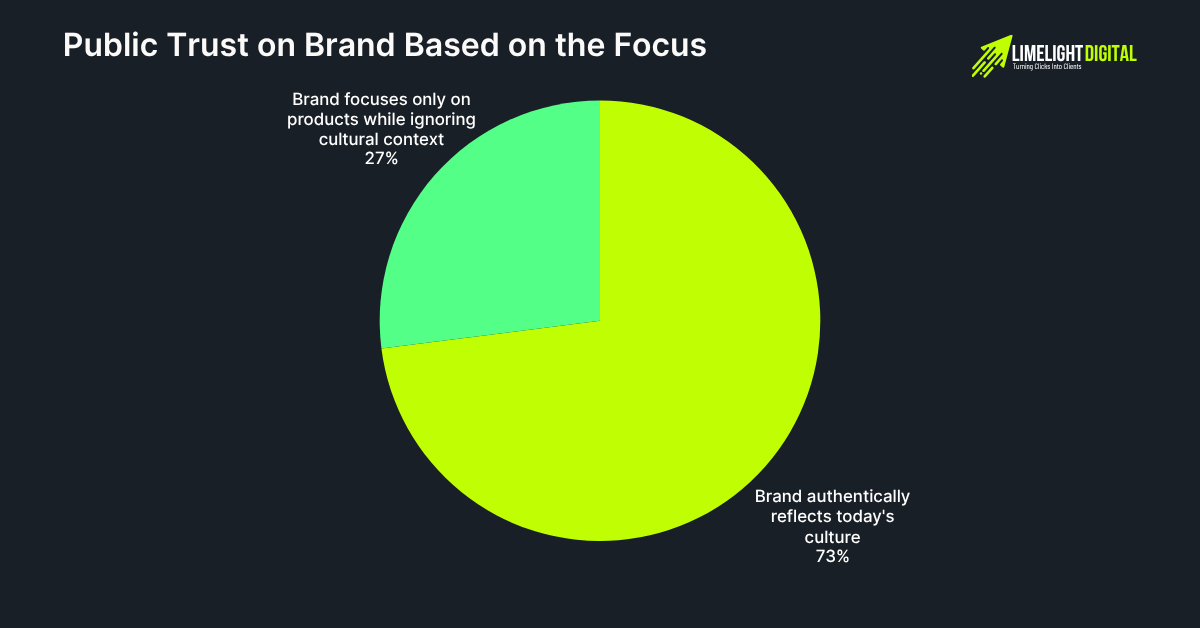
73% of people say their trust in a brand would increase if that brand authentically reflected today’s culture. In contrast, only 27% said trust increases when a brand focuses solely on products while ignoring cultural context.
80% of people trust brands they personally use, a higher trust score than that given to media, governments, NGOs, or employers, per Edelman’s research.
Domestically headquartered brands outperform foreign competitors on consumer trust by an average of 15 points globally, rising to gaps of 29 and 30 points in Canada and Germany, respectively.
A PwC and Wharton Business School longitudinal study of 450 public companies found that those with consistently high trust ratings outperformed their peers by 20% in cumulative shareholder return, quantifying trust as a financial asset.
60% of consumers now say trust and transparency are the most important brand traits in 2025, while 67% say trust is required to continue purchasing from a brand.
Source: Amra & Elma, Boston Brand Media, Edelman, WiserNotify, LinkedIn
Brand Consistency Statistics
Companies maintaining strict brand consistency across all platforms see revenue increases of up to 23%. A 2026 study confirmed that enterprise-level financial services firms achieved the highest gains at 31.2%.
Despite 95% of organisations having brand guidelines, only 30% actively enforce them. This implementation gap is estimated to cost mid-sized and large businesses more than $6 million in lost revenue annually.
Source: Shout Out Studio, Amra & Elma
68% of companies that focus on brand consistency report revenue growth of 10-20%.
Furthermore, 60% of companies report that consistent branding added between 10% and 20% to their revenue, while 33% report an uplift exceeding 20%.
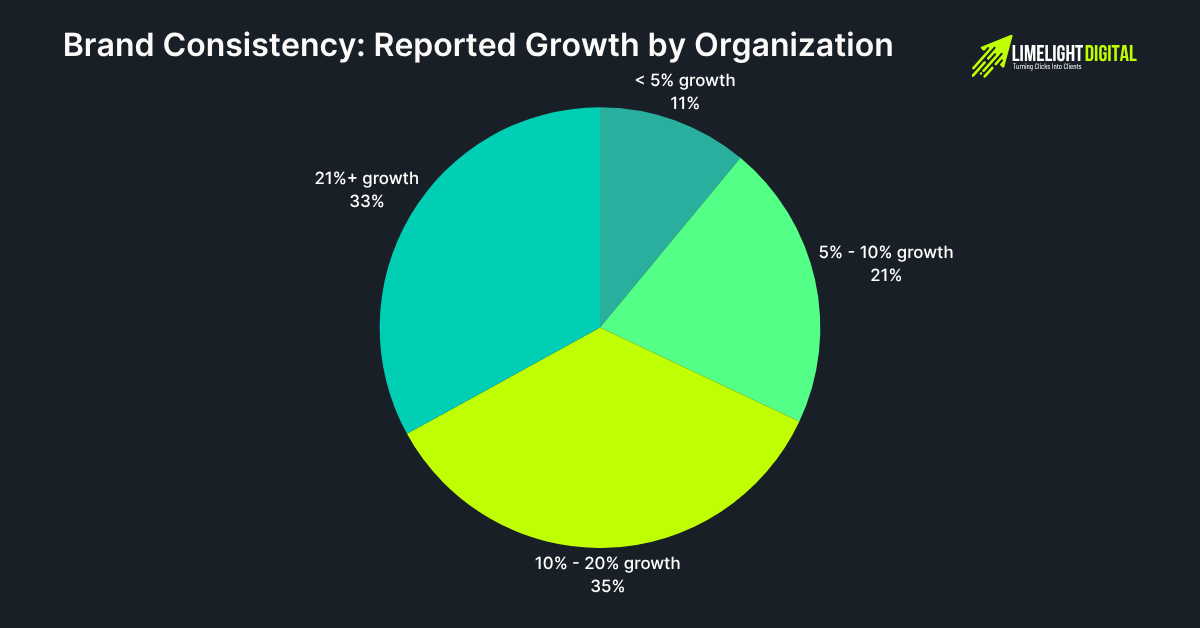
The table below shows shares of organizations reporting growth by brand consistency:
| Growth Range | % of Organizations Reporting Growth |
|---|---|
| < 5% growth | 11% |
| 5% – 10% growth | 21% |
| 10% – 20% growth | 35% |
| 21%+ growth | 33% |
Source: WiserNotify
Brands maintaining consistent visual and tonal identity achieve unaided recognition rates averaging 79.6% higher than brands with inconsistent asset usage, rising to 88.1% in mobile-first environments, per a 2026 Ipsos study tracking 9,200 consumers across five countries.
Inconsistent brands may need up to 1.75× more advertising and media spend to achieve the same growth that consistent brands achieve with their standard budgets.
Source: Marketing LTB, Amra & Elma
Visual Branding & First Impression Statistics
94% of first impressions are design-related.
62-90% of snap judgments consumers make about a brand or product are based on colour alone, formed within just 90 seconds of initial exposure.
Specifically, 85% of consumers say colour is the main reason for choosing one product over another.
Using a consistent signature colour can increase brand recognition by up to 80%. Critically, consumers are 81% more likely to recall a brand’s colour than its name.
75% of consumers identify a brand primarily by its logo, making logos the most identifiable brand recognition symbol above colour (45%) and visual style (60%).
Source: Huddle Creative, Amra & Elma, Exploding Topics, Loyola, Hostinger
Half of consumers have chosen one brand over another based solely on colour, with Gen Z and Millennials doing so at a rate of 51%.
According to the 2025 Adobe survey of 1,000 US consumers, 54% say blue is the most trusted brand colour, followed by black at 44%.
Blue was also the most likely to trigger impulse purchases (31%), ahead of black (28%) and gold (27%).
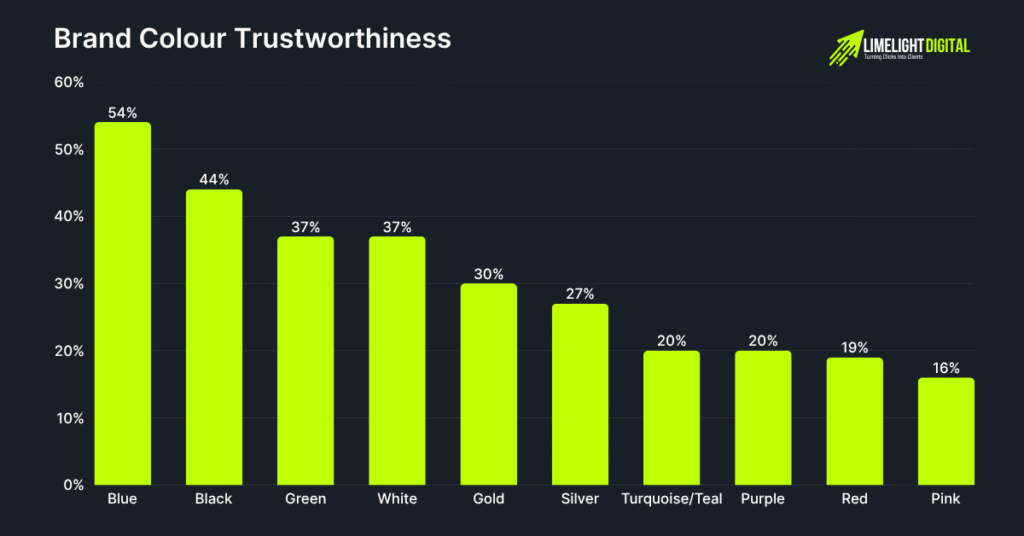
Here is how different colours affect brand trustworthiness:
| Color | Trust Percentage |
|---|---|
| Blue | 54% |
| Black | 44% |
| Green | 37% |
| White | 37% |
| Gold | 30% |
| Silver | 27% |
| Turquoise/Teal | 20% |
| Purple | 20% |
| Red | 19% |
| Pink | 16% |
Source: Adobe
Brand Awareness On Social Media
90% of social media users follow at least one brand on a platform, and 77% of consumers prefer to shop from brands they follow on social media.
89% of marketers found an increase in brand exposure through social media, according to Sprout Social research.
Brands that reply to social media comments see a 48% higher engagement rate compared to those that post without interaction.
Social commerce is now a primary purchase pathway: online beauty sales in the US climbed to 68.4% of total market revenue by early 2026, with social platforms driving the majority of discovery.
More broadly, 35% of all beauty sales now originate from social platforms like TikTok Shop and Instagram Shopping.
Posts with consistent branding receive 23% more engagement on platforms like Instagram and LinkedIn than off-brand content, confirming that brand consistency is as valuable on social as it is in traditional channels.
Also Read: Instagram User Statistics
Source: Cropink, AWISEE, Amra & Elma, All Subject Journal, HubSpot, G2
Branding ROI & Performance Statistics
Companies investing in branding initiatives see a 27% higher ROI overall.
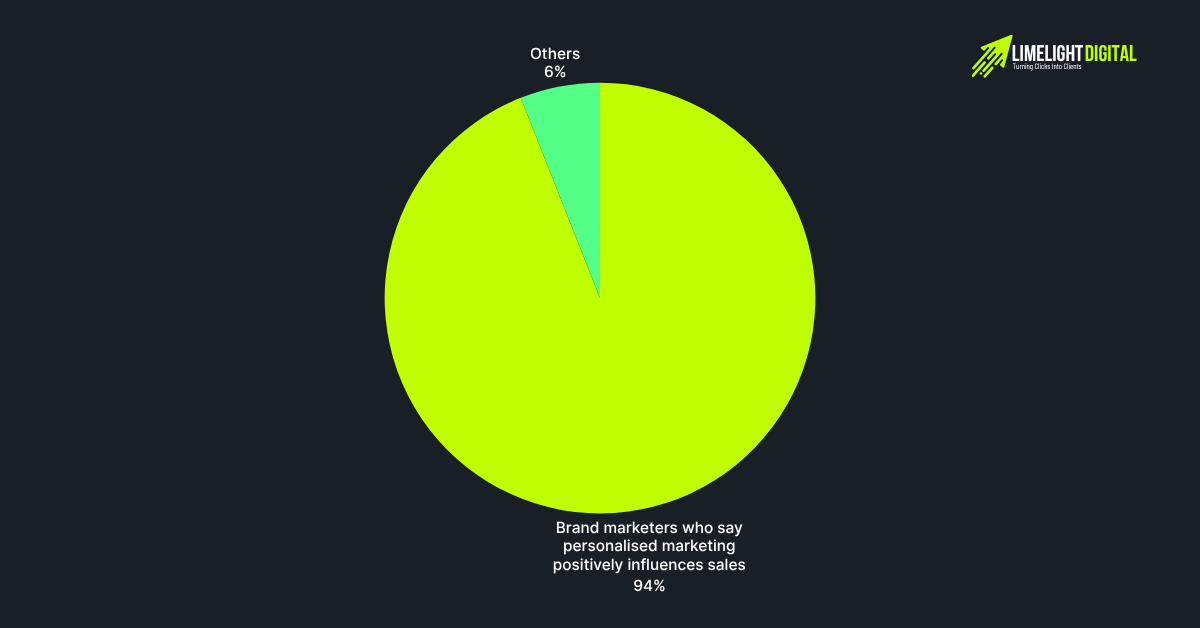
Personalised branding increases ROI by 88%, with 94% of brand marketers accepting that personalised marketing positively influences sales. Video branding specifically is 43% more effective than image-based content.
A 5% increase in customer loyalty can raise profits by up to 95%, making a retention-focused brand strategy one of the highest-ROI investments a business can make.
User-generated content (UGC) increases brand trust and influences 79% of purchasing decisions.
Companies with a strong employer brand see approximately a 50% reduction in cost-per-hire, and 88% of candidates consider employer brand and reputation before applying.
Content marketing generates 3× more leads than traditional outbound marketing. Companies that publish brand-aligned blogs generate 67% more leads than those that do not.
A study of 450 public companies found that those with consistently high trust ratings outperformed peers by 20% in cumulative shareholder return.
Source: Boston Brand Media, Cropink, Marketing LTB, LinkedIn, WiserNotify, CMI