
Graphic design has evolved into a global, fast-growing profession blending creativity with technology. With the market projected to reach $59.29 billion in 2026, it reflects strong demand across industries and digital platforms. From freelancers to agency professionals, designers play a key role in shaping brand identity and communication.
This article explores key statistics, demographics, salaries, market trends, and the future scope of graphic design worldwide.
Graphic Design Statistics 2026 (Top Picks)
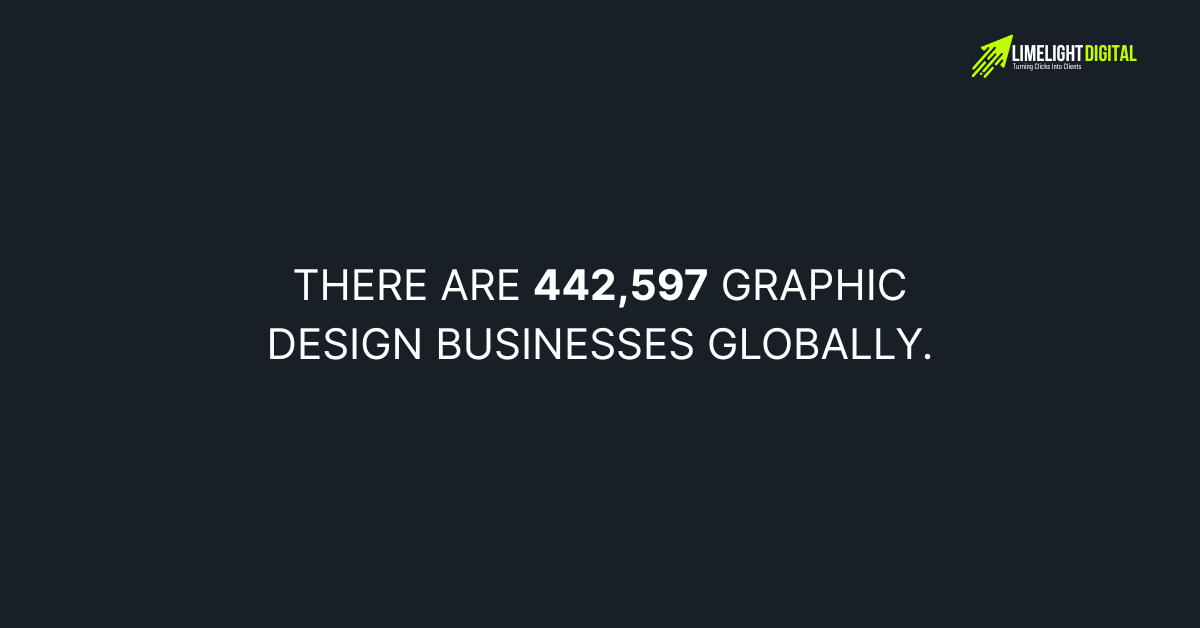
- There are 442,597 graphic design businesses globally, growing steadily.
- 90% of graphic designers work as freelancers worldwide.
- Market expected to reach $85.53 billion by 2031.
- 81% of businesses rely on graphic design regularly.
- 75% of designers now use AI tools daily.
- Remote design jobs increased 150% from 2020 to 2025.
How Many Graphic Designers Are There In The World?
There are 442,597 graphic design businesses globally as per the latest data, up 1.8% from 2024, and the sector has grown at a compound annual rate of 2.0% from 2020 to 2025.
Source: IBISWorld
India has over 300,000 graphic designers active on freelance platforms, while the United Kingdom has approximately 66,000 professional graphic designers.
Source: Colorlib
About 90% of the global graphic design industry is made up of freelancers, making it one of the most freelance-dominant creative professions worldwide.
Source: G2
The global creative economy, which encompasses design, media, advertising, and the arts, employs approximately 30 million people in total.
Source: Colorlib
Graphic Designers Demographics
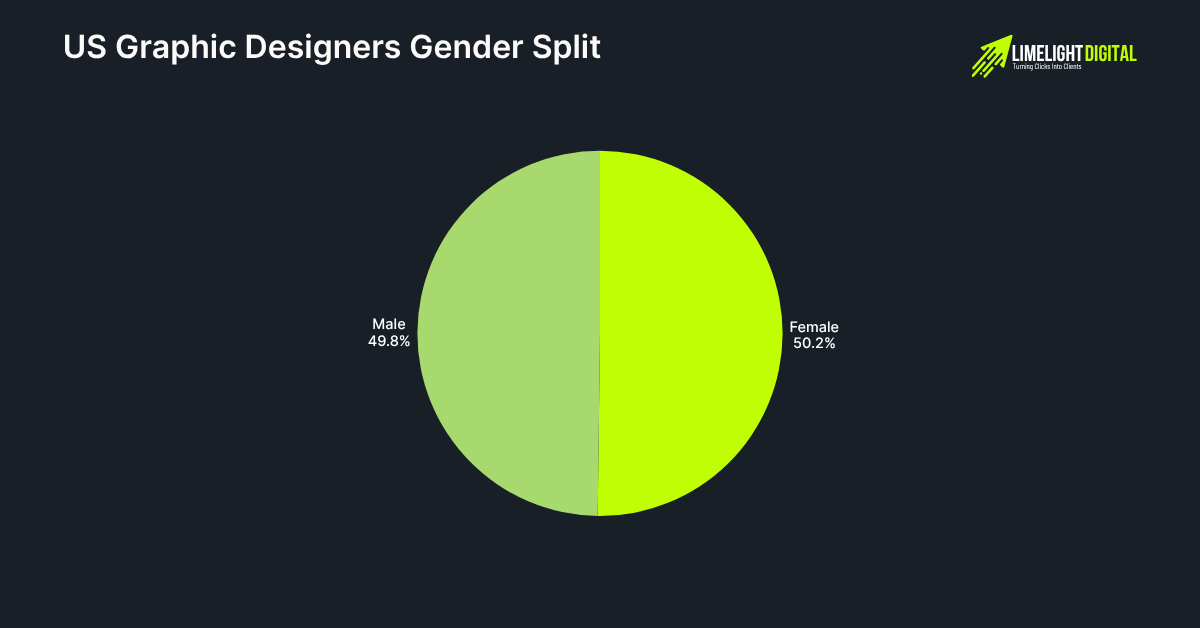
Women make up 50.2% of all graphic designers in the United States, with men comprising 49.8%, making graphic design one of the most gender-balanced creative professions.
The average age of a graphic designer in the U.S. is 38 years old, and designers aged 40 and above represent 42% of the total workforce.
In terms of racial composition, 70.2% of graphic designers in the U.S. are White, followed by Hispanic or Latino at 10.6% and Asian at 10.4%, according to U.S. Census Bureau-verified data.
Source: Zippia
In 2023, 73.2% of the graphic designers’ workforce were White, of which 54.7% were women and 45.3% were men. Asian designers accounted for 8.87%, and those identifying as Two or More Races made up 8.4%.
The most common undergraduate major for graphic designers is Visual & Performing Arts, followed by Communications (16,108 graduates) and Business (13,293 graduates).
Source: Data USA
Graphic Design Market Size
The graphic design market is projected to reach $59.29 billion in 2026, up from $55.1 billion in 2025. It is expected to grow at a compound annual growth rate (CAGR) of 7.60% between 2026 and 2031, reaching approximately $85.53 billion by 2031.
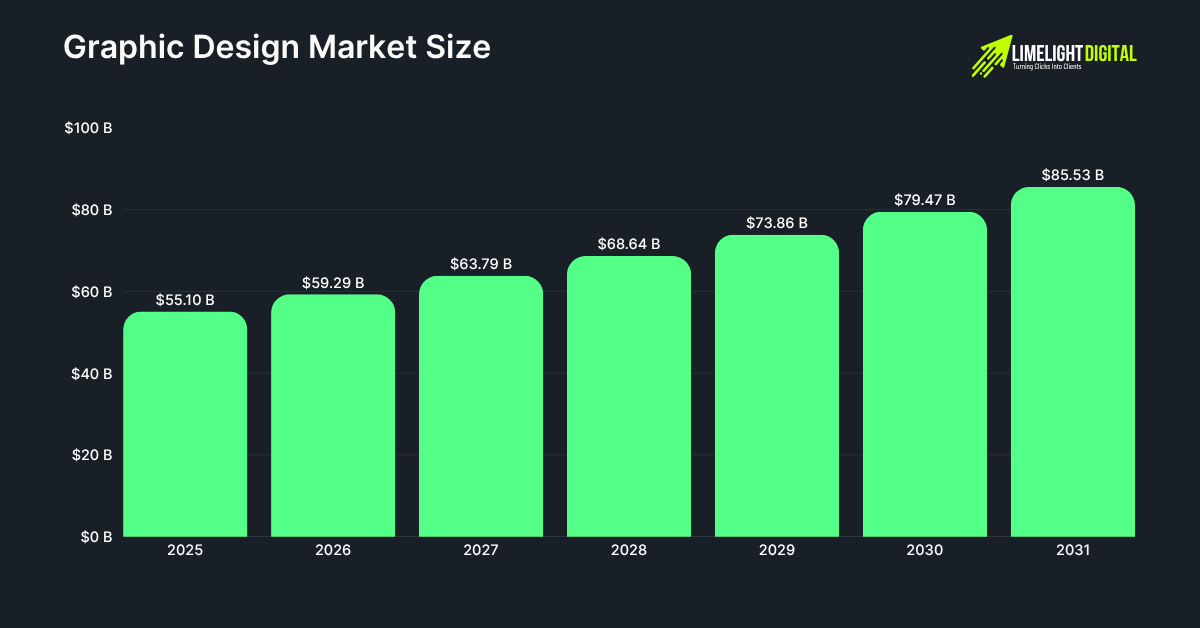
| Year | Market Size |
|---|---|
| 2025 | $55.10 billion |
| 2026 | $59.29 billion |
| 2027 | $63.79 billion |
| 2028 | $68.64 billion |
| 2029 | $73.86 billion |
| 2030 | $79.47 billion |
| 2031 | $85.53 billion |
North America leads the global graphic design market with a 39.1% market share in 2025, bolstered by mature enterprise spending and advanced creative technology adoption.
Asia-Pacific is the fastest-growing regional market for graphic design, with an 11.1% projected CAGR through 2031, fueled by digital startup booms in India, Southeast Asia, and China.
Logo & brand identity design dominated the market in 2025 with a $17.27 billion valuation, representing 31.35% of the total global graphic design market share.
SMEs account for 57% of the graphic design market revenue globally because online retail success heavily depends on professional visual presentation and brand consistency.
Source: Mordor Intelligence
The global market for specialized design services grew from $147.18 billion in 2023 to $156.92 billion in 2024, reflecting broader demand for creative professional services.
Source: G2
Graphic Designers’ Salary
The median annual wage for graphic designers in the United States was $61,300 in May 2024, according to the Bureau of Labor Statistics.
The lowest 10% of U.S. graphic designers earned less than $37,600, while the top 10% earned above $103,030, illustrating a wide income spread within the profession.
Source: U.S. Bureau
In the United Kingdom, the average salary for a graphic designer is £30,417 per year, based on 2,900 salary reports updated as of March 2026.
| Duration | Pay |
|---|---|
| Per Year | £30,416 |
| Per Month | £2,154 |
| Per Week | £557 |
| Per Day | £144 |
| Per Hour | £13.99 |
Source: Indeed UK
UK freelance graphic designers charge between £20 and £100+ per hour, depending on experience and project complexity, with entry-level designers typically charging £20-£30 and senior designers £60-£100.
Source: Inkbot Design
The average annual pay for a freelance graphic designer in the U.S. is $72,122 as of March 2026, equivalent to approximately $34.67 per hour, with top earners at the 90th percentile reaching $100,000 per year.
Source: ZipRecruiter
Graphic design rates in the U.S. average $27.88 per hour across all employment types, though freelancers with specialised skills or strong client relationships can charge $100-$150+ per hour.
Source: Invoice Fly
The technology industry is the highest-paying sector for graphic designers in the U.S., with companies like Google, Amazon, and Disney topping freelance compensation lists.
Source: Glassdoor
Other Graphic Design Facts
81% of businesses worldwide use graphic design in some form, and 94% of first impressions of a company are design-related, making visual presentation a cornerstone of brand perception.
Source: G2, LinkedIn
Colour improves brand recognition by up to 80%, and roughly 33% of the world’s top 100 brands incorporate the colour blue in their logos, tied to perceptions of trust and stability.
Source: Illustrator How
People can recall 65% of visual content three days after seeing it, compared to only 10% of written information, a key reason visual communication continues to outperform text-based content in marketing.
Source: Skillademia
Around 1 in 5 marketers (approximately 20%) spend over 20 hours each week producing graphic designs, and 22.9% of marketers allocate between 20-50% of their total budget to visual content production.
Source: G2
94% of people have abandoned a website due to poor design, underscoring the financial consequences of neglecting visual quality in digital presence.
Source: TrueList
Improving both design and usability is critical, and following a structured on-page SEO checklist can help businesses optimise visual hierarchy, page speed, and user experience together.
Adobe products command over 80% of the graphic design software market. Canva leads among non-professionals with 190 million+ monthly users, while Figma has 4 million+ paying customers in the UI/UX space.
Remote design jobs increased by 150% between 2020 and 2025, reflecting the profession’s strong compatibility with distributed work models and enabling designers to access global client bases.
Source: Colorlib
The graphic design software market itself is valued at $9.62 billion in 2025 and is expected to reach $17.70 billion by 2032, growing at a CAGR of 9.1%, faster than the broader design services market.
Source: Coherent Market Insights
Future of Graphic Design
75% of designers now use AI tools in their workflow, up from just 35% in 2023, a dramatic shift that has occurred in under two years, driven by tools like Adobe Firefly, Midjourney, and Canva’s Magic Design.
This shift mirrors broader marketing trends highlighted in recent AI SEO statistics, where automation and machine learning are rapidly reshaping content creation and digital strategy.
Source: Colorlib
32% of design job listings now mention AI skills as a requirement, compared to just 3% in 2023, making AI fluency the fastest-growing skill requirement in the graphic design job market.
Source: Colorlib
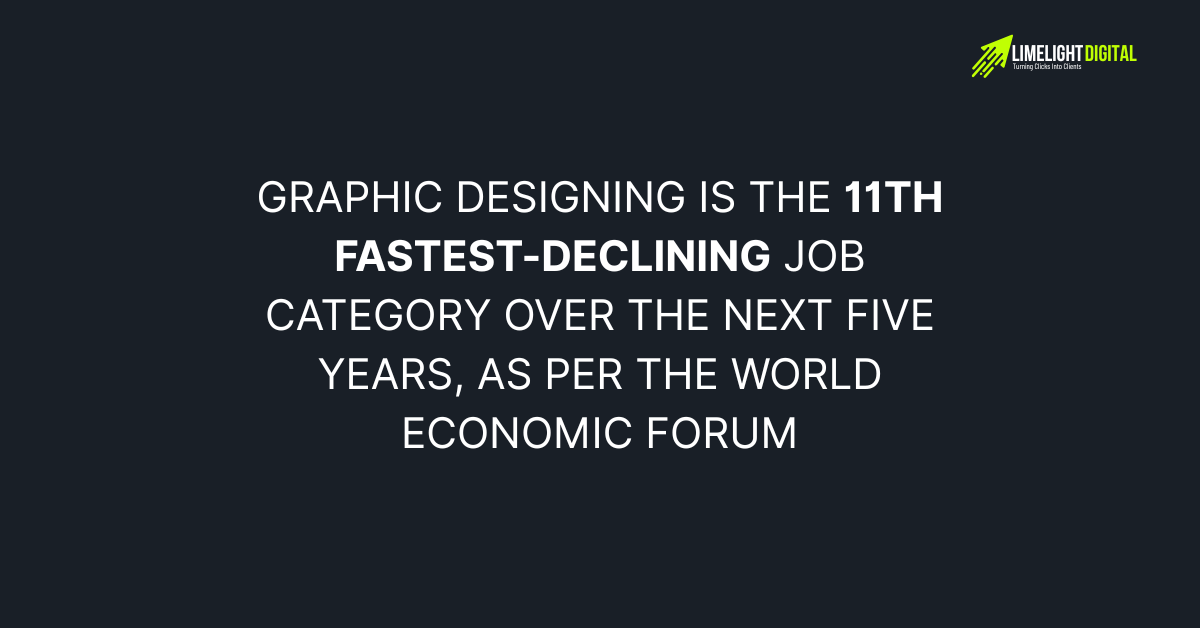
The 2025 World Economic Forum Future of Jobs Report, which surveyed 1,000 employers across 55 countries representing over 14 million workers, identified graphic design as the 11th fastest-declining job category over the next five years, a significant reversal from its “moderately growing” status in the 2023 report.
Source: World Economic Forum
Despite this warning, the U.S. Bureau of Labor Statistics projects approximately 20,000 annual job openings for graphic designers each year through 2034, primarily due to workforce turnover rather than net new demand.
Source: U.S. Bureau
Graphic designers who are proficient in AI tools experienced an average salary increase of 12% compared to peers without such expertise, according to a report from the Design Industry Association, making AI adoption a direct financial incentive.
Source: Research.com
AR/VR and 3D visual design are projected to grow at a 14.3% CAGR through 2031, making it the fastest-growing design sub-segment as immersive experiences expand in retail, training, real estate, and entertainment.
Adobe’s Firefly generative AI platform alone generated $125 million in annualised recurring revenue in 2025, and Creative Cloud subscriptions reached $4.23 billion in Q1 2025, signalling how deeply design software is becoming an AI-powered business.
Source: Mordor Intelligence
Figma proficiency appears in 67% of design job listings, and motion design is required in 45% of senior design role listings, as brands increasingly need animated and interactive content across digital platforms.
Source: Colorlib
By 2026, the “tactile rebellion” will have become a dominant trend, and designers and clients are intentionally moving away from AI-generated perfection toward rough, human-centered visuals that communicate authenticity, warmth, and imperfection as a form of brand differentiation.
Source: Schweitzer Designs